Where to Find Card for Paper Models
 18
Card is often needed when building paper models. It can reinforce the structure, form hulls and fuselages, or provide plinths and display bases. A thickness of 1 mm is common, though some projects need 2 mm. You can buy suitable card or make it yourself by laminating sheets together.
Before looking at those options, let's consider what card is and which type works best for modelling.
Card for Paper Models
Paper is generally understood as a fibrous sheet weighing up to about 250 g/m². Card is similar but heavier or thicker, sometimes consisting of multiple layers. There is no single universal definition, but sheets thicker than 0.2 mm are commonly considered card.
Card is widely used for packaging, as well as printed items such as brochures, folders, gift boxes, books and magazines.
Corrugated board is common in packaging. Its layers include a fluted sheet, and the number of layers varies. We do not recommend it for paper models because its structure can crack or bend along the corrugations.
For modelling, choose solid, uniform card. It may still be made from several bonded paper layers.
Buying Card for Paper Models
Finding card of an exact thickness can be surprisingly difficult. Online listings often omit the measurement, so you may have better luck in a printing-supply or stationery shop. Much of the card sold for children's crafts is not labelled by thickness.
Our online shop is temporarily closed. It previously offered A4 Dutch grey card in 1 mm, 1.5 mm and 2 mm thicknesses, in single- and multi-layer varieties suitable for paper models.
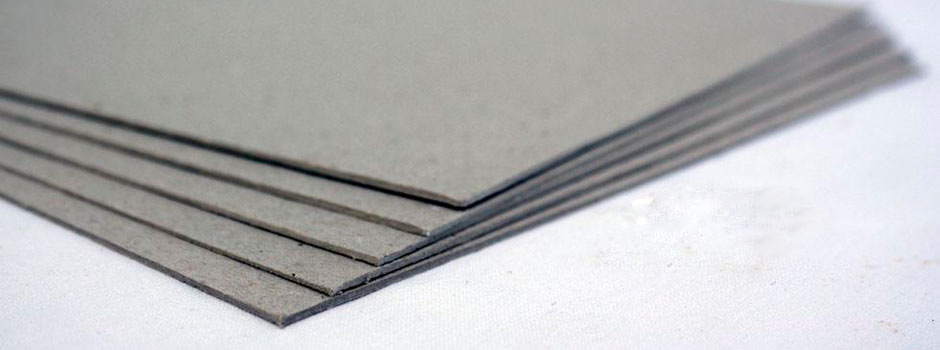
If you cannot buy card of the required thickness, you can laminate your own sheets.
Making Model Card Yourself
You will need drawing paper, PVA glue, two absorbent wallpaper rollers, a tray, a press (heavy books will do) and ordinary office paper to protect the work surface. Drawing paper is often about 0.2 mm thick. For roughly 1 mm card, use four sheets plus the glue layers; for 0.5 mm, use two sheets; for 2 mm, use eight.
- Stack the drawing-paper sheets you plan to laminate. Turn every other sheet over so their grain directions do not all match; this helps reduce warping.
- Lay down protective office paper. Apply parallel lines of PVA glue so they will spread into a thin layer over the whole sheet.
- Use a slightly damp roller to spread the glue across the paper, working perpendicular to the glue lines. The roller will absorb some glue, so less may be needed on subsequent sheets.
- Lay a clean sheet on top, starting at one corner, and smooth it with the second, dry roller.
- Repeat the gluing and smoothing until you reach the required thickness. Place the laminated stack under a press for at least a day, longer if needed.
When the glue dries, the result should be a flat sheet of card. Bear in mind that glue can make it harder to cut and will dull blades more quickly.


